
RetentionOS — Customer Churn Predictor
by Zach Tudor
RetentionOS teaches one of the most valuable ideas in applied machine learning: **churn prediction** — working out which customers are about to stop paying you, while there's still time to do something about it. It's the problem behind retention teams at every subscription business, and it's the classic worked example for logistic regression.
The model runs on six features drawn straight from how a real business thinks about its customers. Account details: tenure in months, monthly charges, and contract type (month-to-month, one year, or two year). Engagement and support: logins in the past 30 days, support tickets opened, and NPS score. Move any slider and the prediction recomputes in real time — set a customer to month-to-month with high charges and few logins, and you can watch the churn risk climb into the red.
Three things make it a genuinely good teaching tool rather than a demo.
First, it uses **logistic regression** — the right model for this job, because the answer is a probability between 0 and 1, not a number on an open scale. Understanding why you reach for logistic rather than linear regression when predicting a yes/no outcome is exactly the distinction the Python machine-learning pathway is built to teach.
Second, it shows **feature impact** — a breakdown of how much tenure, charges, contract type, logins and tickets each contributed to the result. That's model interpretability, and it's what separates a prediction you can act on from a black box. A business needs to know *why* a customer is at risk, not just that they are.
Third, it closes the loop into a **recommended action**. A 53% churn risk isn't useful on its own; "offer a discounted annual plan to lock in commitment" is. Connecting a model output to a business decision is the step most student ML projects never take.
It's the whole applied-ML arc in one screen — features in, probability out, explanation attached, decision recommended.
More like this
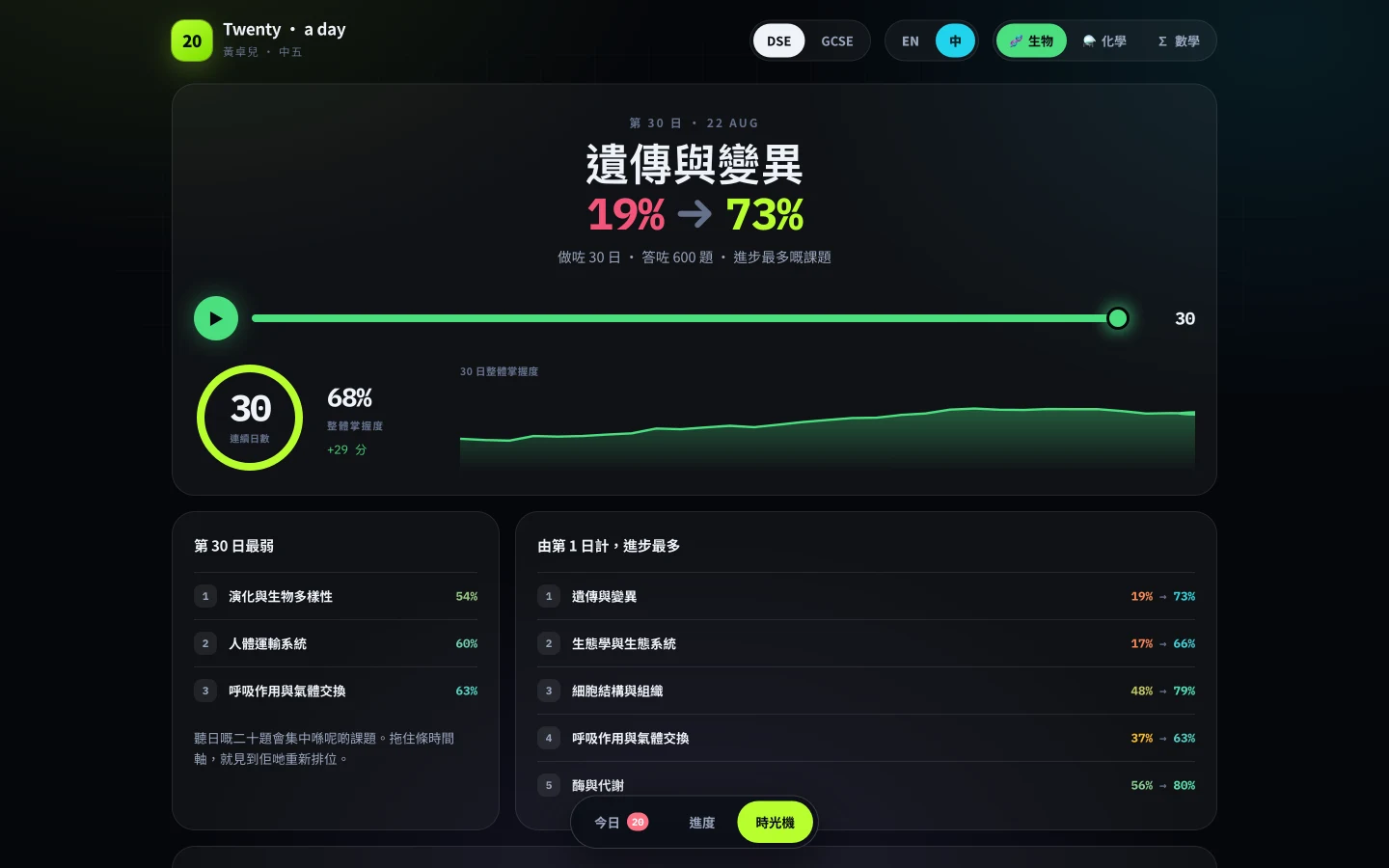
Twenty a Day — Adaptive DSE & GCSE Revision
by Uncredited
A daily revision habit built on two published models fitted in the browser — Bayesian Knowledge Tracing and Duolingo's half-life regression — that can explain, question by question, why each one appeared today. Bilingual in English and Cantonese.
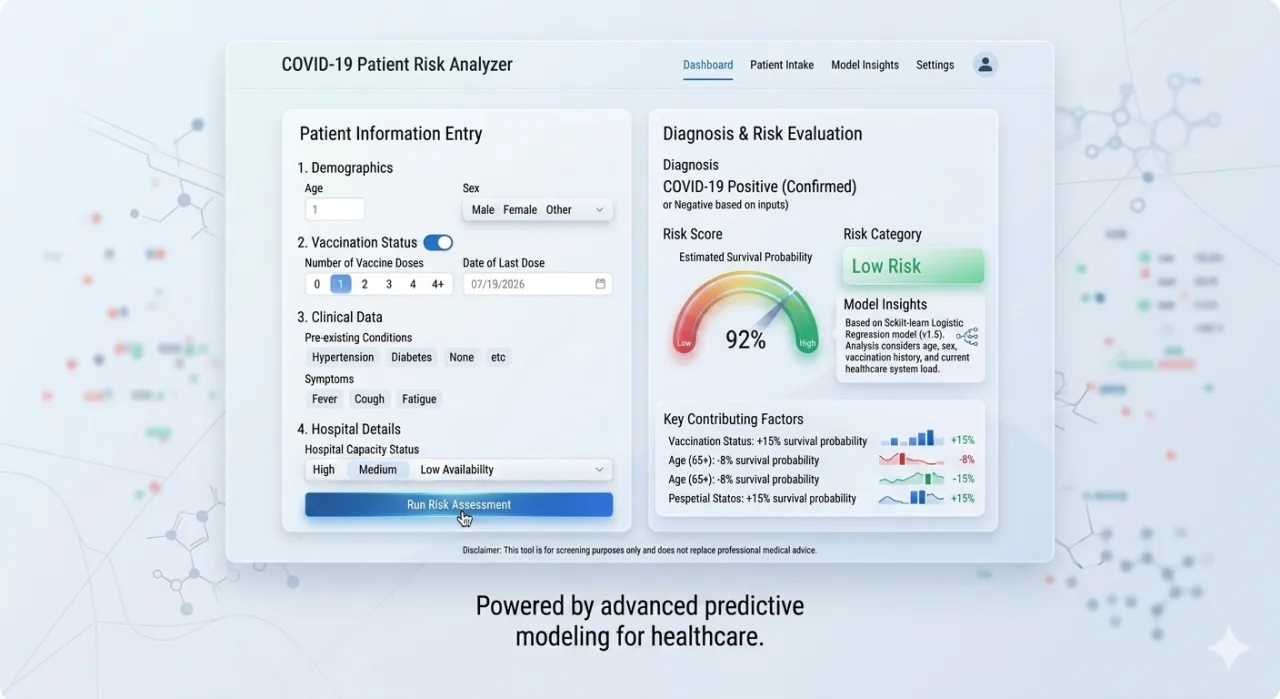
COVID-19 Survival Predictor
by Surina Shahani
A machine-learning model that estimates a patient's outcome from real-world factors — vaccine doses, age, sex, and how full the nearest hospital was at the time of care.

Life Predictor — What Does Your Future Hold?
by Simran Shahani
A playful prediction app powered by her own scikit-learn models — answer a handful of questions and get data-driven guesses at your future city, career, car and love life.